
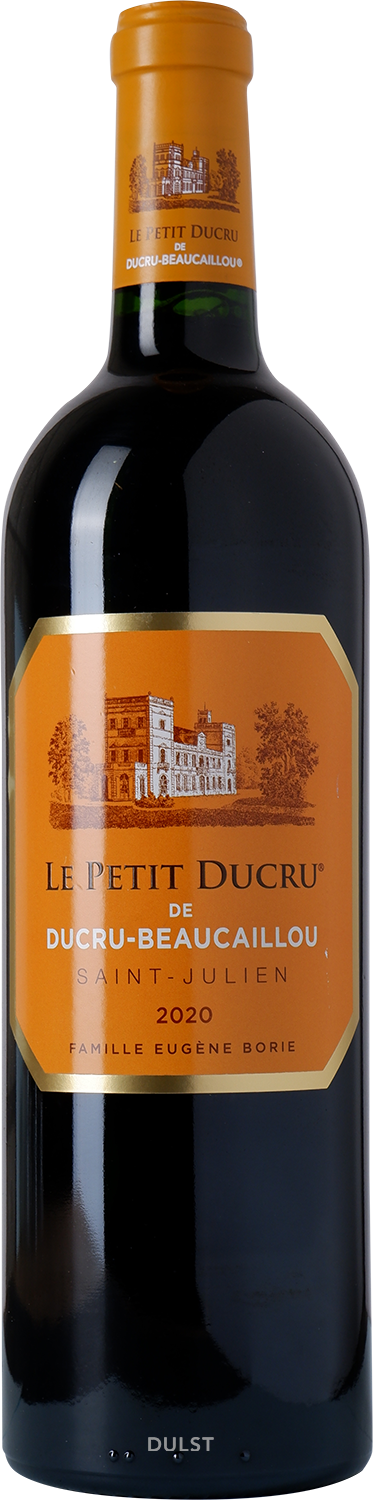
Le Petit Ducru de Ducru-Beaucaillou | St. Julien
Red wine | France, SAINT-JULIEN | 2020
Le Petit Ducru presents a deep ruby-red colour and an expressive nose of ripe red and black fruits, complemented by notes of cedarwood, spices and a subtle hint of leather. On the palate, the wine is full-bodied and harmonious, with refined tannins, lovely freshness and a creamy texture. The elegant, inviting finish is supported by a subtle touch of oak, adding complexity without overpowering the fruit.
€35.82
29.60
excl. VAT

Specifications
Serving temperature
16°-18°C
Type
Red wine
Country
France
Vintage
2020
Storage (years)
> 10
Volume
0.75
Grape & craft
Region
SAINT-JULIEN
Grape varieties
Merlot (78%), Cabernet Sauvignon (18%), Petit Verdot (4%)
Viticulture
Sustainable/HVE
Vinification
The vineyards are planted on the estate’s characteristic Günzian gravel soils, which have given the château its name: the famous “beaux cailloux”. These poor, gravelly soils provide excellent drainage and contribute to the quality and elegance of the Saint-Julien wines. Like the estate’s other wines, Le Petit Ducru is crafted with great care, with rigorous grape selection and vinification tailored to the identity of each individual plot. The wine is then aged for twelve months in French oak barrels, approximately one third of which are new oak in recent vintages.
Flavour profile
Taste profile
Complex with firm tannins
Food pairing
Stew | Lamb | Beef | Cheese
About Château Ducru Beaucaillou
In the heart of the Médoc, in the prestigious Saint-Julien appellation, lies Château Ducru-Beaucaillou. The château overlooks the Gironde and its estate comprises 105 hectares of vineyards. Since 1720, the estate has a rich history shaped by six families, and since 1942 it has been owned and managed by the Borie family. In the 1855 Classification, Ducru-Beaucaillou was recognised as a Deuxième Grand Cru Classé.
The great distinction of Ducru-Beaucaillou lies in its terroir. The vineyards are planted on the famous graves günziennes: poor soils composed of large quartz pebbles, deposited millions of years ago by the ancient Garonne. These ‘beautiful pebbles’ gave the château its name. They absorb heat during the day and release it gradually at night, helping to promote the ripening of the grapes. The château’s immediate proximity to the Gironde also contributes to a particularly temperate microclimate.